Regional Transit Ballot Measure FAQs

Transform and our partners in the Connect the Bay coalition are working to put a citizen-led measure on the November ballot to fund public transit. In our FAQs, we break down what the measure does, where the money will come from, why it’s critical to Bay Area transportation, and what you can do to help.

What Is the Connect the Bay ballot measure? 

Connect the Bay provides a stable funding source for transit agencies operating in five Bay Area counties. These funds will allow transit agencies to maintain their current level of operations or improve them, providing reliable, sustainable transportation for millions of people.

Why does transit need extra funding?

During the pandemic, transit ridership plummeted as nonessential workers stayed home. As businesses slowly returned to normal, ridership has increased, but so have costs. While federal and state one-time funds kept transit operating, those funds have now run out, leaving many transit services facing a fiscal cliff.

What is a fiscal cliff?

A fiscal cliff is a point of no return, where a transit provider is forced to drastically reduce service because of a funding shortfall. At that point, transit services can go into a death spiral. With longer waits between buses or trains, transit becomes less reliable and less convenient. Riders are forced to find other means of getting to work, school, and other destinations, and declining ridership further reduces revenue. This starts a negative feedback loop that, in the worst situation, can close down an entire transit service.

I don’t take public transit. Why should I support Connect the Bay?

Bay Area traffic is already back to pre-pandemic levels. Without transit, it would be gridlock 24/7. Nearly 1 million people ride transit every day in the Bay Area. Imagine adding a million cars to our roadways every day. Frequent, reliable, appealing transit serves the interests of drivers too.

In addition, robust public transit is an equity, climate, and affordability issue. People who can’t drive, either because of age or ability, rely on transit to maintain autonomy and mobility. Owning and maintaining a personal vehicle is expensive; public transit provides an affordable option for low-income families. Transit-dependent riders are lower-income and more diverse than the general population. Finally, trains and buses have a much smaller carbon footprint than individual cars, even electric vehicles. Supporting transit is a pro-climate position.

What parts of the Bay Area will be affected by the measure?

Alameda, Contra Costa, San Francisco, San Mateo, and Santa Clara Counties are participating in the regional transit funding measure.

Which transit agencies will receive funding from this measure?

The funding from the measure will go to support operations at BART, Muni, Caltrain, AC Transit, SF Bay Ferry, TriValley Wheels, County Connect, Tri Delta Transit, Union City Transit, Westcat, and VTA.

How does Connect the Bay raise funds for transit?

The ballot measure asks voters to approve a half-cent sales tax in Alameda, Contra Costa, San Mateo, and Santa Clara Counties and a 1-cent sales tax in San Francisco County. The tax sunsets after 14 years.

What’s the difference between a citizen-led ballot measure and one placed on the ballot by other means? 

The ballot measure language comes from SB 63, a bill passed by the legislature in 2025. The bill gives the Metropolitan Transportation Commission the power to create a taxable district for the five-county measure. However, if MTC were to put the measure on the ballot, it would need a two-thirds majority to pass. In recent years, many funding measures have fallen just short of that supermajority.

When an initiative comes to the ballot through the signature-gathering process, it needs 50% + 1 to pass. By making the regional transportation ballot measure a citizen-led measure, we increase the chance of passage.

How many signatures do we need to collect to qualify for the ballot?

We need to collect over 200,000 verified signatures across the five participating counties. In reality, this means gathering significantly more to ensure we have enough valid signatures.

What’s the deadline for collecting signatures?

We must finish collecting signatures by mid-May.

Who’s behind this measure?

Connect the Bay is supported by labor unions, environmental groups, transit advocates, bicycle coalitions, businesses, and elected officials. A list of individuals and organizations endorsing the measure is at https://connectbayarea.com/endorsements.

If I add my name in support of the regional transit measure, do I have to vote for it?

No. If you’re approached by someone gathering signatures for the regional transportation ballot measure, your signature will only help it get on the ballot so voters can decide. You are free to vote however you choose in November.

What happens if you don’t collect enough signatures in time?

The Metropolitan Transportation Commission and transit agencies could use reserve and other flexible funds to reduce the impact, but it would not be sufficient to stop massive service cuts. Muni would be forced to cut over 20 lines, and BART could go down to one train an hour. 

What can transit supporters do to help?

There are many ways you can get involved, including gathering signatures. Fill out this form to stay updated on the latest developments and find opportunities to volunteer. Go to connectbayarea.com to learn more.

Automated Speed Enforcement Comes to Oakland

Transform marked another milestone in our work for safer streets this week, thanks to legislation we helped pass in 2023. Under a pilot program created by AB 645 (Friedman), Oakland placed 18 speed cameras at key intersections to deter speeding vehicles, the leading cause of accidents and traffic violence. This follows a successful year of a similar pilot in San Francisco. 

Preliminary speed camera data shows high proportion of drivers speeding

The Oakland cameras began issuing warnings last week and will start sending out tickets in March. Tickets start at $50 for cars going 11 mph over the speed limit, with discounted fees for low-income drivers and higher fines for greater speed violations. The citations don’t add points to drivers’ licenses and will help avoid confrontations between drivers and law enforcement.

San Francisco started its automated speed enforcement last year and has a dashboard where the public can see speeding data. Initial results verified what anyone who walks or rides a bike already knew: people drive too fast on city streets. 

What’s more, speeding disproportionately impacts low-income residents, seniors, disabled persons, and communities of color. Black Oaklanders are three times as likely to be killed or severely injured while walking, while those over 65 years old are twice as likely to be killed in a crash, according to data from the City of Oakland.

Next steps for automated enforcement

Six percent of Oakland streets account for 60% of collisions, so the speed cameras are focused on this high-injury network. The cameras photograph only the license plate, not the face of anyone in the vehicle, and records are not stored long-term. The California pilot was designed with privacy and equity in mind.

Human traffic enforcement is spotty, since officers can’t be everywhere all the time, and is steeped in a legacy of discriminatory practice. Automated enforcement through cameras that operate 24/7 on dangerous streets has been proven to change driver behavior and reduce the need for traffic stops that can turn fatal for Black and brown drivers.

The pilot established under AB 645 lasts until 2032. Data collected during the pilot will be used to evaluate the effectiveness of automated speed enforcement to save lives. Transform will continue to advocate for evidence-based and equity-focused measures that enhance neighborhoods and make it safer for people of all ages to walk and roll to school, work, and other destinations.

Walking with the Dead: Avenida de Altares

This year, Avenida de Altares brought together many parts of East San Jose in a way that felt both familiar and very new. The Mexican Heritage Plaza was full of families moving from one altar to the next. There were quiet moments, crowded moments, and a lot of joy in between. People stopped for face painting, food, the vendor market, and the big performance from Ozomatli that pulled everyone in. There was also a lot of excitement around the lucha libre matches, which added to the energy of the night.

Sustainable transportation to a cultural celebration

Transform worked with the School of Arts and Culture to support the event by gathering information about how people traveled and what barriers they experienced. Earlier in the year, we completed a walk audit and a focus group that gave us a clearer picture of the conditions around the plaza to support sustainable travel options.

One of the most meaningful parts of the event was the honorary altar for the MACSA Youth Center. The organization was an important part of the neighborhood for years, but the building was heavily damaged in a large fire earlier this year. Many people in the community shared stories about growing up with MACSA, attending programs there, or having a family member who did. There were many types of altars throughout the plaza, and the MACSA altar stood out as a place where people paused to remember and reflect. Photos of the fire and past MACSA programs helped tell the story, and the altar became a place where people talked about the loss and also the importance of keeping cultural spaces alive.

A welcoming space — despite ICE

In the days before the event, the community got a notice reassuring everyone that they were welcome and safe amid rising fears about ICE being active in the Bay Area. This message mattered. It shaped how people decided to attend, who chose to bring their families, and how long people stayed once they arrived. It reminded us that transportation choices are tied to trust and comfort, not only the physical conditions on the street.

Creating community and walkability together

There is still a long road ahead to make East San Jose safer and more accessible for walking, biking, and transit. The event itself showed what is possible when the community gathers in a place that feels like home. The challenge now is building a transportation system that supports that energy.

Over the next few weeks, Transform will review transit ridership data from the night of Avenida de Altares and compare it with that of the same period from last year. Once we have that information, we will share a short report and look at how travel patterns are changing over time and what that means for future events. The hope is to understand not only how people arrived this year but also what it will take to help more people choose to walk, bike, or ride transit in the years ahead.

Transform Helps Affordable Housing Residents Get Moving

For the past two years, Transform has contributed our community engagement expertise and knowledge of pedestrian and bike safety to Oakland Making Moves, a project spearheaded by Alameda County Health’s Nutrition Services Team. The goal is to support affordable housing sites to explore safe routes to healthy neighborhood destinations. 

Recently, our work culminated in the creation of an older adult pedestrian safety curriculum. We also had the privilege of piloting the presentation at three affordable housing sites in East Oakland: Lockwood Gardens, Lion Creek Crossings, and Madison Park Apartments. The curriculum aims to remind the audience about general pedestrian safety tips. Most importantly, it facilitates a conversation that unearths the opportunities and barriers seniors face in pursuing a healthier lifestyle. The course offers participants a chance to start connecting with one another through shared experiences and leaves folks with the opportunity to identify and rally around collective safety concerns. 

I presented at Lockwood Gardens, and I’ve been reflecting on the factors that contributed to the success of this presentation. It’s clear that the time and effort we invested in building trust, both leading up to and during the session, were critical. With the exception of Lion Creek Crossings, where we’ve done extensive engagement with residents on another project, Transform had not met the communities at the sites before our work on Oakland Making Moves. We understand the importance of dedicating resources to meaningful community outreach, preparation, and relationship-building to connect with people and deliver a message they can hear. 

A constant learning process

Several lessons emerged from our work on Oakland Making Moves that can help guide and strengthen future engagement.

Partner with trusted community representatives

We were fortunate to work alongside Alameda County Health staff, who have been building strong relationships at each housing site for more than two years. Through the Oakland Making Moves project, they’ve hosted regular activities, such as group walks, that bring residents together. Thanks to their groundwork, Transform was able to enter as both a credible partner and a friendly face. 

Center the collective wisdom in the room

The curriculum was designed to encourage participation, and we took several steps to help people feel safe sharing their thoughts and contributing to the conversation. From the start, we acknowledged that everyone has valuable insights to offer about pedestrian safety. We also set clear expectations that while not every concern could be addressed immediately, all input was important and would be revisited later. To demonstrate our commitment to follow-up, we documented every comment on chart paper so participants could see their feedback being captured in real time. Throughout the presentation, we built in multiple opportunities for participants to speak up, ensuring their voices were woven into the discussion. Everyone appreciated being listened to.

At Lion Creek Crossings and Madison Park Apartments, we faced the added challenge of a language barrier. With the help of a translator, we were able to communicate effectively with Cantonese- and Mandarin-speaking residents. However, it was clear that Transform’s depth of engagement at Lion Creek Crossings was the key to bridging the language barrier. Our prior, deep engagement with this community through Know How to Go played a key role in fostering trust and connection, allowing the conversation to flow more naturally despite language differences. Even with the language barrier, folks had a lot to share about how they get around and the challenges they face.

Share food to build connection and comfort

Sharing food is more than a gesture of hospitality. It’s a powerful way to build connections and create common ground. Having food at our presentations helped foster trust and made conversations feel more open and natural. We were fortunate to have the flexibility to purchase food from a variety of local vendors, working closely with Alameda County Health staff to ensure our choices aligned with their health messages and reflected the preferences of the residents. For example, we served tamales at a lunchtime presentation and pastries, fruit, and coffee at a breakfast session. Residents at both meetings expressed their appreciation for the food, underscoring how something as simple as a shared meal can strengthen relationships and engagement.

And people appreciated it even more when we handed out reflective pizzas as a fun item and an example of ways to stay visible and safe.

Looking to the future

The main accomplishment from Oakland Making Moves is that we were able to bring to light the opportunities and real challenges these communities face in using active transportation. 

When asked why they don’t walk or roll, participants gave these reasons:

  • BART being unclean
  • Unclear mobility devices on bus
  • Safety (in the streets)
  • Violence, crime
  • Kids biking on the sidewalk
  • Past accidents
  • Trauma
  • Crime
  • Drivers and walkers looking at their phones
  • Language barrier communicating with drivers

When we asked about safety concerns, community members told us:

  • People on bikes
  • Signage
  • Dirty streets
  • People on headphones

Each issue points to new opportunities: to educate bike riders and pedestrians about sharing space; work with BART on station cleanliness, as outlined in our Ride Fearlessly report; help vulnerable community members develop strategies to keep each other safe in their neighborhoods; and much more. As we close out this project, we’ve given Alameda County Public Health a new tool to help people stay active, and we’ve built a bit more of our roadmap for future projects and policy initiatives to bring even more life, joy, and safety to Oakland streets.

Thank you to the Alameda County Public Health Department for supporting this crucial program.

Traffic Congestion Is a Housing and Transit Problem, Not a Highway Problem

One of the hardest aspects of transportation advocacy is that the solutions to transportation problems are often counterintuitive. Induced demand or induced travel is the best-known example of this: when you widen a highway, that encourages more people to drive on it, returning congestion to the original levels within a few years. But what we’re missing is that traffic congestion isn’t a problem that can ever be solved by building more or wider roads, because it’s not a problem with the highway.

Yet Caltrans keeps planning highway expansions, and California legislators and the governor continue to prop up these unsustainable projects.

Picking up the right tools to solve congestion

The United States has spent decades and trillions of dollars prioritizing driving and car-centric infrastructure. As a result, there will always be more demand for driving at peak hours than there will be space on the roadway. Thankfully, there are better ways to reduce congestion, like building infill, affordable housing near jobs, schools, and transit hubs, plus adding bus, walking, and rolling options.

Unfortunately, when all you have is a hammer, everything looks like a nail. In California, Caltrans is tasked with maintaining the highways and many state routes that wind through towns and cities, often serving as local roads and streets. This includes responding to problems on the roads, including backed-up traffic and slow travel times. For decades, Caltrans’ only tool to solve congestion has been roadbuilding, so that’s what it does — to the tune of $20 billion a year.

To truly solve California’s tangled traffic, we need to take the problem out of the hands of the road builders and address the root causes of congestion: building more affordable housing near jobs and improving public transportation options.

Wrong solutions create more problems

State Route 37, which connects Vallejo and other Solano County communities to Marin County and beyond, is the Bay Area poster child for wrong-headed highway widening. Caltrans proposes to spend $500 million to add lanes to a section of the roadway that will be underwater within the next couple of decades due to sea level rise. It’s a high price to pay for a very transitory solution.

And money isn’t the only cost of this destructive highway project. Governor Gavin Newsom just signed AB 697. The bill lifts limits on killing endangered species in the delicate marshland adjacent to the roadway during construction, clearing the way for Caltrans to bulldoze its plan through.

But even without the looming spectre of climate change, the SR 37 project won’t fix congestion because it doesn’t address its causes.  Marin County has more jobs than households, thanks to thriving businesses and tourist attractions, plus a strong science and technology industry, and workers gravitate to job centers in these locations. Meanwhile, Vallejo and neighboring communities on the other side of the Baylands have something the North Bay counties don’t: cheaper housing. The average rent for a three-bedroom unit in Vallejo is $2,476, while rent for the same unit in Marin is double that, at $4,995 a month. So workers in lower-income sectors —like the people who keep restaurants, hotels, tasting rooms, and spas running — are often forced to look far from their work to find housing they can afford.

The lack of affordable housing near jobs in North Bay communities is compounded by a lack of frequent and reliable public transit. This leaves workers with no choice but to drive between work and home, clogging SR 37. 

Widening a section of this highway to ease the congestion is like taking pain medication for a broken arm, but not setting the bone. You might feel better for a while, but you haven’t solved the problem.

Housing and transit are better investments

According to California’s Department of Housing and Community Development, Marin County needs to build over 14,000 units of new housing by 2031 to keep up with its housing needs. Building these homes is one of the best ways to reduce congestion — much better than adding new lanes to a highway that will simply be new surfaces for congestion in a few years. A report on the impact of California’s successful Affordable Housing and Sustainable Communities (AHSC) program showed that building 20,000 homes took more than 40,000 cars off the road each year. With a $500 million public investment, affordable housing developers could help finance thousands of housing units in the North Bay. 

Single-occupancy vehicles are a wildly inefficient way to move humans from one place to another. A recent study by the Climate and Community Institute modeled the impact of shifting $1 billion in highway spending to public transit. The study found that this shift saved almost $200,000 in congestion-related costs, as well as reducing vehicle miles traveled (VMT) by more than 1.8 million annually. Putting $500 million toward improved transit options would do much more to ease congestion on overcrowded roads like SR 37.

Highways aren’t drainpipes

Even the smartest engineer will come up with the wrong answer when they start with the wrong assumptions. For decades, our road planners have assumed that roads function like drainpipes: iIf the pipe is overflowing, get a wider pipe to handle the flow. 

A better metaphor for the network of streets and highways that connect our communities is as an expression of our desires, frustrations, and aspirations. Our roads show where we’ve failed by backing up traffic when transit and housing options are suboptimal. They show what we wish for with people creating ad hoc walkways to cut through too-long blocks and bike riders on sidewalks where streets are too dangerous. But our transportation systems can also highlight the best of us, lifting up our shared humanity and strengthening our social fabric, from the ubiquitous smile and head-nod of strangers riding the bus to the wave of a toddler zooming past on the back of an e-bike. 

Highway widening as the go-to solution for traffic congestion is a failure of attention and imagination. We need to direct the attention of the decision makers who allocate funding for transportation, housing, and transit to the true causes of congestion. And we need to expand our imagination of what’s possible to solve congestion from what has always been to what actually works. 

Transform is leading the fight to move beyond highways as the answer to every transportation challenge. We’re working to find real solutions that improve people’s lives and stop climate change. We hope you’ll join us.

Rethinking How We Pay for Transportation Infrastructure

Our transportation system faces two problems, one new and one old. The foundational issue is that it’s fundamentally inequitable. Marginalized communities have long borne the brunt of negative transportation impacts while paying a disproportionately larger share of their income to get where they need to go. 

The second problem is that as California drivers switch to EVs and gas-powered cars become more efficient, the gas tax revenue we use to fund transportation infrastructure will decline. 

California’s transportation spending continues to prioritize highway expansion over more sustainable modes, but we have a chance to change direction at the intersection of these two fundamental problems. In July, Transform and the Coalition for Clean Air hosted a webinar focused on how a statewide road charge to replace the gas tax can present an opportunity to redress inequalities and reduce climate emissions.

Replacing the gas tax

Darnell Grisby, Chair of the California Transportation Commission, kicked off the webinar with a big reality check: California’s transportation system has a shortfall of more than $215 billion through 2035. He pointed out that the system needs not just road maintenance but also “investing in a more multimodal system and responding to the climate crisis.” Further, existing revenues are dropping, and more than 70% of our state’s transportation funds come from fuel taxes. Automobiles are becoming more fuel-efficient and, as fuel consumption goes down, gas tax revenue is projected to drop by $31 billion over 10 years.

Transform’s Zack Deutsch-Gross pointed out that a road charge — where drivers pay based on how many miles they drive instead of how many gallons of gas they use — is the most likely replacement for the gas tax. “The key is not just to have a flat per-mile charge that backfills revenues,” he said, “but to use it as a tool to advance climate, equity, and affordability for California.” For example, the road charge could be tiered based on income.

Deutsch-Gross showed why there is such an urgent need for affordability. The lowest-income families spend about 30% of their income on transportation on average, but those with a car spend a whopping 38%. But low per-mile rates aren’t the only path to equity with a road charge. He pointed out that transportation expenses represent just 5% of income for low-income families that don’t own a car. So when we are talking about affordability for all Californians, we need to also invest in transit, walking, biking, and affordable housing near transit.

Putting equity into the equation

Sofia Rafikova, Policy Advocate for the Coalition for Clean Air (CCA), drilled deeper into the solutions, highlighting three ways the road charge can advance climate and equity goals. “The state should look at implementing an income-based rate structure, which could reduce the economic burden placed on low-income households,” she said. To promote cleaner, safer vehicles, CCA and over 20 groups in the ClimatePlan network are recommending charging higher rates for higher-income drivers with low-efficiency and larger vehicles. In this setup, EV owners would pay less than owners of gas-powered vehicles.

CCA would like to see the road charge funding prioritize fix-it-first road maintenance and alternatives to driving, rather than expanding climate-destroying highways.

Surveys show public support for equitable pricing

To counteract negative perceptions of road charges and how they may affect both policy opportunities and communication, Dr. Asha Weinstein Agrawal from the Mineta Transportation Institute provided useful insights from her 16 annual surveys on this topic. For example, there was more support for a mileage fee that charged higher rates for vehicles with higher pollution. She said this is a strong counter to the common argument that “anything besides a flat rate will be too confusing and people won’t like it.” A full 63% of people Agrawal surveyed support a rate structure tiered by income, with lower rates for low-income drivers. Her information is critical for making strong, data-backed arguments for equity and clean air.

A statewide road charge is likely within the next few years. However, we’ll need a movement to overcome inertia and pressure from those invested in maintaining the status quo. This webinar is a great starting point to learn where we need to go.

Watch the full webinar.

Gains and Losses in the Campaign to Stop Highway Expansion

Last week, the California Transportation Commission (CTC) held a hearing to decide whether to grant funding to a number of projects that Transform opposes, most notably a project to widen State Route 37. As expected, the commission approved $73 million for the SR 37 project, which won’t solve congestion and will be underwater due to sea level rise within a short time.

While we would have preferred a different outcome, this hearing wasn’t a total loss. We brought awareness to the fiscal irresponsibility of spending money on an expensive project with such a short life span. The press covered the issue, focusing on Transform’s perspective that funding the project is the equivalent of throwing taxpayer dollars into the ocean. Not surprisingly, the more people know about the SR 37 project, the more they oppose it.

We also shook up the CTC. The commission usually serves as a rubber stamp for Caltrans projects, granting most funding requests with little pushback or public scrutiny. Nearly 200 Transform supporters emailed the commissioners to object to funding SR 37, and a number of people came to the meeting to testify against it. 

We were pleased to see some commissioners asking tough questions. Although it ultimately approved the funding, the CTC is on notice that it will be held to account for its actions by a newly engaged public.

Next steps to stop the Highway 37 project

We haven’t given up on our campaign to stop the SR 37 widening project. The CTC’s $73 million in grants only partially fund the construction, which is estimated to cost $500 million. Transform will oppose the allocation of other funding. We also continue to work to defeat AB 697, which smooths the way for construction by lifting limits on how many endangered species Caltrans can kill in the wetlands surrounding the current roadway.

Congestion on State Route 37 and many highways around California is a real problem. But, while it looks like a highway and transportation problem, congestion is actually a development, housing, and transit problem. The issues with SR 37 are caused by a lack of affordable housing near jobs in Marin and inadequate public transit between Solano, Napa, and Marin. We’re working toward a world with more affordable, infill housing, more transit, and fewer highway lanes. 

Upcoming Webinar: The Road Ahead — Replacing the Gas Tax

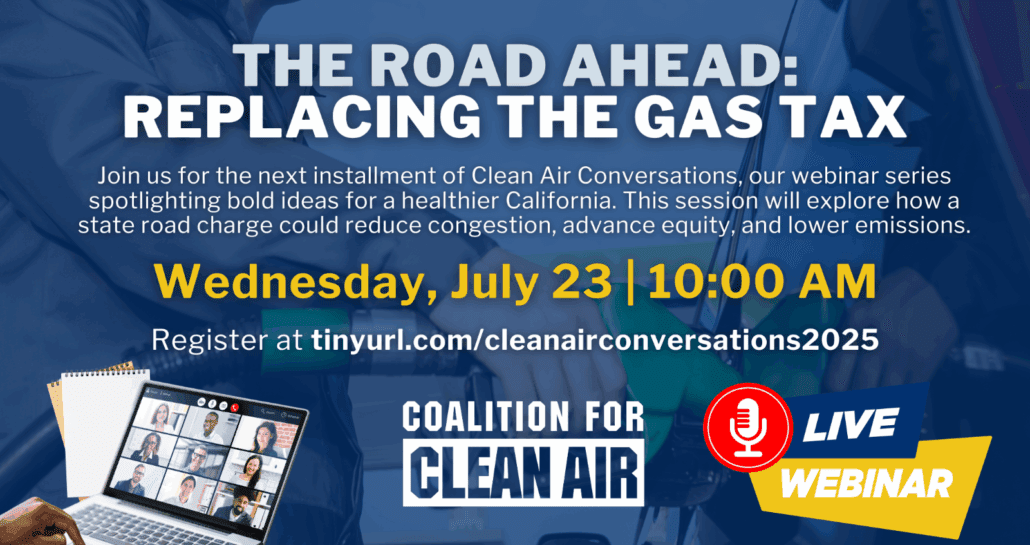
Join Transform and the Coalition on Clean Air for The Road Ahead: Replacing the Gas Tax on Wednesday, July 23, at 10 a.m. PT. Our policy director, Zack Deutsch-Gross, will join panelists from the Coalition on Clean Air, the Greenlining Institute, the California Transportation Commission, and the Mineta Transportation Institute to discuss how a state road charge could reduce congestion, advance equity, and lower emissions.

Register today.

The end of the gas tax

Gas tax revenue provides a significant portion of the funding California uses to repair and build streets and roads. The money doesn’t just fix highways and traffic lanes; the Active Transportation Program, a dedicated grant fund that supports biking and walking projects throughout the state, is funded by the gas tax. And that revenue is in decline.

Californians are making the transition to electric cars at the highest rate of any state in the U.S.; more than one-third of all U.S. EVs are registered in California. As a result, gas tax revenues will decline by $4 billion annually by 2035. Replacing the gas tax offers us an opportunity to change the status quo, redirecting transportation dollars currently spent on highway expansion toward active and public transportation. 

Toward an equitable road charge

The existing structure of the gas tax is inequitable, so it’s a good thing we’re replacing it. Californians face the second-highest transportation costs and some of the highest fuel costs in the nation. And the gas tax disproportionately impacts those who cannot afford more fuel-efficient vehicles and can’t afford to live near jobs, schools, and other amenities.

A road user charge, calculated by miles traveled, is a good way to charge drivers proportionate to their road usage. 

However, some low-income families are forced to move to outer suburbs due to the lack of affordable housing near jobs, boxing them into long commutes. For those road users, a usage charge could be an unfair burden. As we consider replacing the gas tax, one of the key considerations for any new funding mechanism is that it should not place undue burdens on those least able to pay.

Road pricing can have benefits beyond providing funding for necessary road maintenance. By connecting the cost directly to vehicle miles traveled, pricing makes the impact of driving clearer and may incentivize people to switch to other transportation modes. In addition, the revenue that road pricing generates can be used not only for maintenance but also to fund alternatives to driving, such as more frequent transit service.

Join us on July 23, 2025, for a discussion of what’s coming, how we’re thinking about what’s next, and the potential benefits of new models for transportation funding.

Panelists:

  • Dr. Joe Lyou, President & CEO, Coalition for Clean Air (Facilitator)
  • Dr. Asha Weinstein Agrawal, Director of Education, Mineta Transportation Institute
  • Hana Creger, Associate Director of Climate Equity, Greenlining Institute
  • Zach Deutsch-Gross, Policy Director, Transform
  • Sofia Rafikova, Policy Advocate, Coalition for Clean Air

Webinar information:

3 Ways Transform Fights Highway Expansion

California has to choose between continuing to do what we always did and build new highway lanes in a fruitless effort to ease congestion (spoiler alert: it won’t work), or we can shift our transit system to sustainable modes and fight climate change. We can’t do both. 

Transform works on both fronts, seeking more funding for green transportation options and combating the all-powerful Highway Lobby. Our work to redirect California’s transportation dollars away from highway-building and toward true transportation choice takes three forms.

Legislative action

Each year, we support legislation that funds active mobility and public transit and moves us from our car-dependent past into a multimodal future. Last year, Transform sponsored a bill that will bring transparency to our transportation spending, AB 2086 (Schiavo), which requires Caltrans to report where our transportation dollars are going.

In addition, we work against bills that would facilitate more driving, such as this year’s AB 697, which will make it easier to widen State Route 37.

Speaking against specific projects at the planning level

When projects to add highway lanes are at the planning stage, they must do an environmental review and release a draft for public comment. In the case of a widening of I-680 in the East Bay near Walnut Creek, we felt the Draft Environmental Impact Report didn’t consider all the factors it should have in recommending new highway lanes, and we submitted a comment letter detailing our objections to the project. 

We have also opposed the project to widen State Route 37 between Solano, Napa, and Sonoma Counties, joining with allies to voice our opposition to those with the power to stop the project. Not only will this project not solve congestion; it spends millions of dollars on building a highway that will be underwater in the near future due to rising sea levels. It’s the definition of a boondoggle.

Opposing funding for building new lanes

Transform’s budget advocacy revolves around seeking more funding for infill affordable housing (one of the best ways to fight climate change), public transit, and active transportation. This year, the results have been mixed, and we don’t have the final budget as of this writing. Based on the legislature’s budget, our coalition succeeded in salvaging funding for affordable housing and transit operations, but we failed to get back $400 million that was taken from the Active Transportation Program, which funds biking and walking infrastructure. 

We take bold and creative approaches to chip away at the funding sources that allow bad projects to be built. At the California Transportation Commission’s June 26 meeting, the commission will vote on giving funding from three specific transportation sources to Caltrans for the SR 37 widening, and we are loudly voicing our objections. You can help: use the form below to email the CTC commissioners and tell them not to fund the SR 37 project.


Project Location 101-92 Interchange

Opposition Grows to San Mateo Highway Widening

Almost a year ago, Transform signed on to a letter opposing a project to build new highway lanes connecting State Route 92 from the San Mateo Bridge to Highway 101. The project — first proposed in 2016 by the San Mateo County Transportation Authority (SMCTA), City/County Association of Governments of San Mateo County (C/CAG), and Caltrans — recently gained powerful new opponents: the San Mateo City Council.

Building a movement against new lanes, one project at a time

The 101/92 connector project is particularly fraught because it would require taking more than 30 properties by eminent domain, including public parks. Bus service across the San Mateo Bridge was discontinued during the pandemic and hasn’t been restored; making more space for cars instead of resuming suspended transit service is the wrong approach.

Advocates have been building a movement against this project, and it paid off at a recent City Council meeting, where Streetsblog SF reported that there was overwhelming public comment in opposition to the new connector, with no one speaking in favor.

Members of the San Mateo City Council criticized the project for prioritizing car travel over other forms of transportation and contributing to the pollution burden in the affected communities. The highway expansion would come at the expense of homes, including senior housing, and public parks that provide recreational space for children. 

Transform is working with our allies to encourage planners, engineers, agency staff, and elected leaders to look beyond highways for solutions to local and regional transportation issues. Building new highway miles in a time of accelerating climate crisis is effectively pouring gasoline on a burning building. Change is hard, but we believe there are transportation and housing options that will work better for everyone while mitigating climate change.

Our budget should reflect our values

The enormous expenditure required for even a few miles of new highway could be more productively spent. For example, civic leaders could use the expected $300 million price tag for this highway expansion to restart the transbay public transit service or build workforce housing on the Peninsula, so workers aren’t forced into long commutes by high housing prices.

The San Mateo City Council will write a letter requesting that the involved agencies redirect the funds to projects that will truly benefit the community. In the face of such strong opposition from both residents, advocates, and elected officials, we hope SMCTA, C/CAG, and Caltrans will scrap this project. 

Read the letter:

The Latest from Transform

Stay informed on our work to create more equitable, just, and affordable housing and transportation in California.

Address:
1721 Broadway, Suite 201
Oakland, CA 94612

Get in Touch:
510.740.3150
[email protected]

© 2025 Transform. All rights reserved.