

VTA Express Lane Plan Is An Excuse to Widen Highways
Transform is working with groups pushing back on a plan by the Valley Transportation Authority (VTA) that will add over 120 new lane-miles across US 101, Interstate 85, Interstate 280, Interstate 680, and State Route 237. As evidence mounts that climate change is literally killing us, it’s imperative that transportation projects focus on moving people around the Bay Area more efficiently and sustainably.
Transform is working on multiple fronts through our Beyond Highways campaign to reimagine our built landscape and create mobility opportunities for Californians that aren’t centered solely on driving.
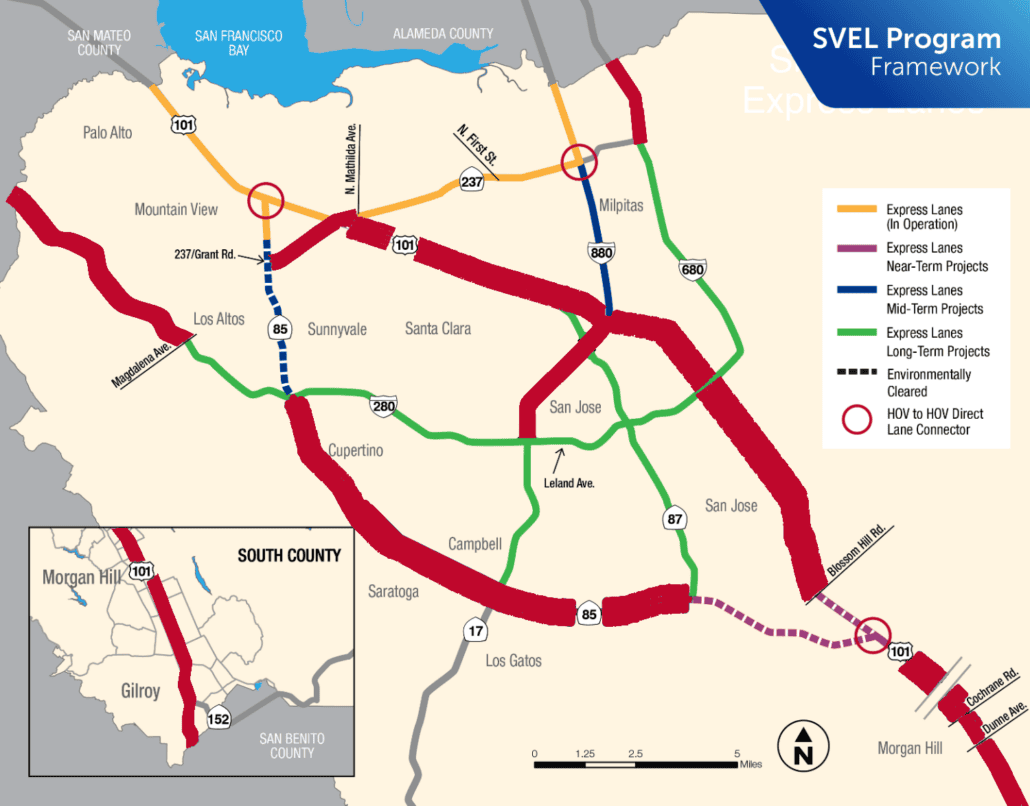
Using express lanes as a cover
Express lanes are essentially carpool lanes that also allow solo drivers in for a fee when there is unused capacity. These lanes can be more efficient than carpool lanes since there is a way to make use of unused capacity while generating revenue to fund walking, biking, and public transit. Transform supports the completion of the Bay Area’s Express Lane Network. But we believe it should be done by converting existing general-purpose lanes, not by expanding highways.
VTA justifies the new highway construction in the plan because the new lanes will be toll and HOV lanes. However, when toll and HOV lanes are additional rather than conversions of existing lanes, they add cars to the road rather than reducing the amount of traffic and the number of vehicle miles traveled (VMT). More lanes lead to more air pollution, more climate destruction, and more incentives to drive.
California won’t meet its goals for reducing tailpipe emissions if it keeps building new highways or expanding existing ones. Agencies often use tolled lanes to justify highway expansion, but there is no “green” version of a new highway lane. We are seeing similar issues with Caltrans’ plan to expand Highway 101 with new toll lanes in northern San Mateo County, which would add pollution to already overburdened communities.
Induced demand is real
If the goal of VTA’s plan is to reduce traffic congestion, it should convert existing lanes into toll and HOV lanes. When you add more highway capacity, even if it includes toll lanes, you increase the incentives for driving. While extra lanes may reduce congestion temporarily, roadways return to their original congested states within a few years — but with even more cars than before.
Despite decades of evidence that induced demand is real, traffic engineers refuse to accept this reality when they address traffic congestion.
The truth is that our jammed-up highway system is a complex problem created by decades of land use and budgetary decisions centered around solo car travel and the preferred — and often the only — mode of transportation to California cities and suburbs. Laying down more asphalt only exacerbates the problems, doubling down on the same ill-conceived principles that got us here. To solve congestion, we need more infill housing to reduce VMT and better transit so people aren’t forced to drive.
Take money from highways and put it toward real fixes
Where we spend money shows our priorities. California spends a huge amount of its transportation budget on maintaining and expanding the state’s highway system. The VTA Express Lane Plan could be an excellent example of how spending less on highway building leads to better outcomes and smarter priorities, but only if it prioritizes lane congestion rather than expansion.
VTA could reduce the cost of its proposed plan by eliminating 120 miles of added highway lanes and instead converting existing lanes into toll and HOV lanes. Focusing the plan on existing highways will deliver results more quickly. The agency can apply the money saved to improved transit, giving South Bay residents more options beyond driving.
Transform and our allies are advocating for this change. VTA needs to hear from as many people as possible. Please sign the petition to the VTA board and urge them to remove new highway lanes from this plan.


